.avif)
What is Visual Perception?
Michael Halkias, O.D.
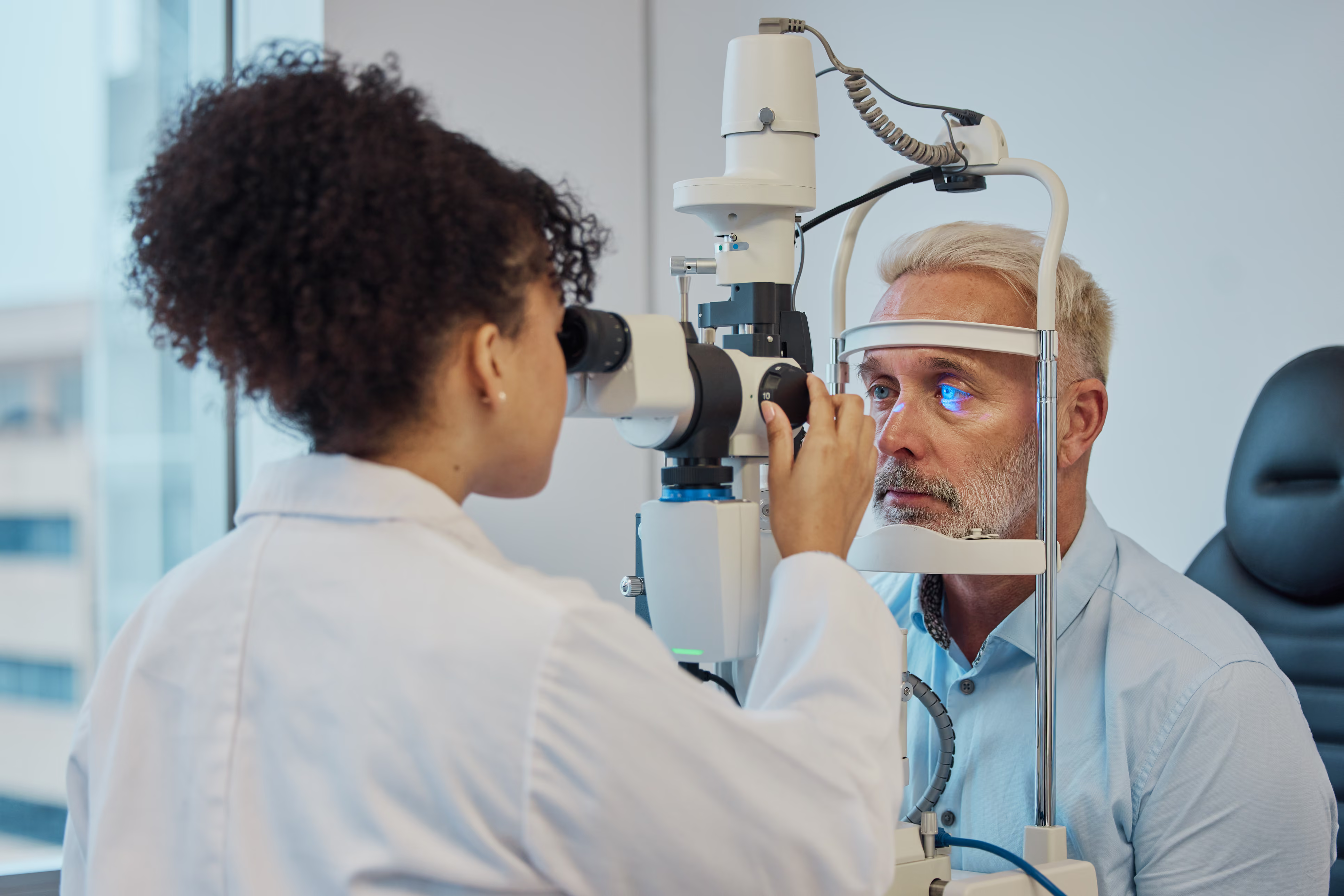
Visual perception constitutes the ability of the eye and brain to detect visual stimuli and translate them into a coherent image. This complex process starts with the capture of light by the photoreceptor cells in the retina, which then convert it into electrical signals. The optic nerve carries these signals to the brain, where various regions work together to process the information, enabling the perception of shape, color, depth, and movement.
The intricacies of visual perception have intrigued scientists and philosophers alike for centuries. It is a foundational aspect of how humans interact with their environment, affecting everyday activities such as reading, driving, and recognizing faces. Understanding visual perception not only uncovers the biological workings of the eyes and brain but also informs the development of technology, such as artificial vision systems and better interfaces for visually impaired individuals.
Research in visual perception covers a range of topics, from detailing the path of visual processing to exploring how perception translates into comprehension and response. This field of study involves disciplines such as neuroscience, psychology, and ophthalmology, among others. It contributes to broad applications, impacting not just medicine and technology, but also areas like design and ergonomics, by providing insights into how visual information is processed and interpreted.
Understanding Visual Perception
Visual perception is the ability to interpret the surrounding environment by processing information contained in visible light. It forms a significant part of how humans understand and interact with the world.
The Brain and Visual Processing
The brain plays a critical role in visual processing. Light enters the eye and the lens focuses it onto the retina, where photoreceptors convert it into electrical signals. These signals are relayed to the brain through the optic nerve. Specifically, the primary visual cortex, or V1, located in the occipital lobe, is the first stop for processing visual information. Here, basic features such as orientation, movement, and color are extracted. Subsequent visual processing occurs in the surrounding cortical areas, where the brain interprets patterns and recognizes objects.
Pathway of visual information:
- Light enters the eye.
- Lens focuses light onto the retina.
- Photoreceptors convert light to electrical signals.
- Signals are sent to primary visual cortex (V1).
- Further processing for recognition and interpretation.
Factors Influencing Visual Perception
Many factors influence visual perception, leading to variations in how one perceives the world. These factors include:
- Biological Factors: Age can lead to changes in lens clarity and retinal health; genetics determine susceptibility to certain visual disorders.
- Environmental Factors: Lighting conditions can dramatically alter perception; context and surroundings can guide visual attention differently.
- Psychological Factors: Past experiences can affect interpretation of visual stimuli; emotions can also influence perception by altering focus and attention.
By understanding the role of visual perception, one can appreciate how individuals may view the same scene differently based on these various influencing factors.
Comprehensive Eye Care at Naper Grove Vision Care
Naper Grove Vision Care provides exceptional diagnostic services and employs preventive measures to maintain eye health, recognizing the critical role visual perception plays in daily life. They commit to excellence, ensuring patients have access to top-quality eye care.
Diagnostic Services and Specialties
Naper Grove Vision Care offers a robust range of diagnostic services. They utilize advanced imaging techniques, such as:
- Optical Coherence Tomography (OCT): For in-depth retina analysis.
- Visual Field Testing: To detect peripheral vision changes.
- Digital Retinography: Allows for detailed imaging of the retina.
Their specialties include managing conditions such as glaucoma, macular degeneration, and diabetic retinopathy. They also provide:
- Comprehensive refraction tests to determine precise lens prescriptions.
- Thorough assessments for eyewear and contact lenses.
Preventive Measures and Eye Health Maintenance
Beyond diagnosis, Naper Grove Vision Care emphasizes preventive care through:
- Routine Eye Examinations: Critical for early detection of eye conditions.
- Education on Eye Health: Patients learn how lifestyle choices can affect vision.
In promoting eye health, they advocate for the use of:
- UV-blocking sunglasses to protect against harmful rays.
- Protective eyewear for sports and high-risk activities.
The clinic ensures that patients understand the importance of visual perception in their daily activities and provides tailored advice for maintaining optimal eye health.
Maintaining Optimal Vision
To preserve the sharpness and health of vision, consistent care and timely interventions are crucial. They are often the difference between sustained visual acuity and preventable sight degradation.
Importance of Regular Eye Exams
Regular eye exams are essential for detecting eye conditions at an early stage, which allows for prompt treatment. Eye care professionals recommend that adults should have a comprehensive eye exam every one to two years, depending on factors such as age, health history, and risk of developing eye issues.
Frequency of Eye Exams:
- Children (under 18): Annually.
- Adults (18 to 60): Every one to two years.
- Seniors (over 60): Annually.
Benefits of Eye Exams:
- Detection of correctable vision problems like myopia or hyperopia.
- Identification of early signs of eye diseases, such as glaucoma or macular degeneration.
Innovative Vision Correction Solutions
Advancements in vision correction provide numerous options that can accommodate a variety of visual impairments and lifestyles.
- Eyeglasses: Traditional yet effective, with options for bifocal or progressive lenses.
- Contact Lenses: They offer a glasses-free experience and include options such as soft lenses for comfort and rigid gas-permeable (RGP) lenses for sharp vision.
- Laser Surgery: Procedures like LASIK can permanently correct certain vision problems.
- Intraocular Lenses (IOLs): Used post-cataract surgery to replace the eye's natural lens.
Vision Correction Benefits:
- Improved visual acuity and quality of life.
- Potentially reduced dependency on corrective lenses.
Individuals should consult with an ophthalmologist to understand the most suitable options for their specific vision needs. Maintaining good visual health involves not only being reactive to issues but also proactive through regular check-ups and embracing appropriate correction solutions. Naper Grove Vision Care provides our patients with the highest quality eye care, delivered in a uniquely personal manner. For the past 75+ years, we have served hundreds of thousands of patients in the western Chicago suburbs. At Naper Grove Vision Care, we are continuing to evolve with the demands of our community. We continue to learn about eyecare treatment and invest in the resources to maintain state-of-the-art vision services. Book your next eye appointment with one of our friendly, expert team members.