.avif)
LASIK Eye Surgery
Blurred or hazy vision often means your eyes are not bending light the way they should. LASIK gently reshapes the cornea so light focuses correctly on your retina. At Naper Grove Vision Care, we determine whether LASIK is a safe option for you and provide complete post-op care.
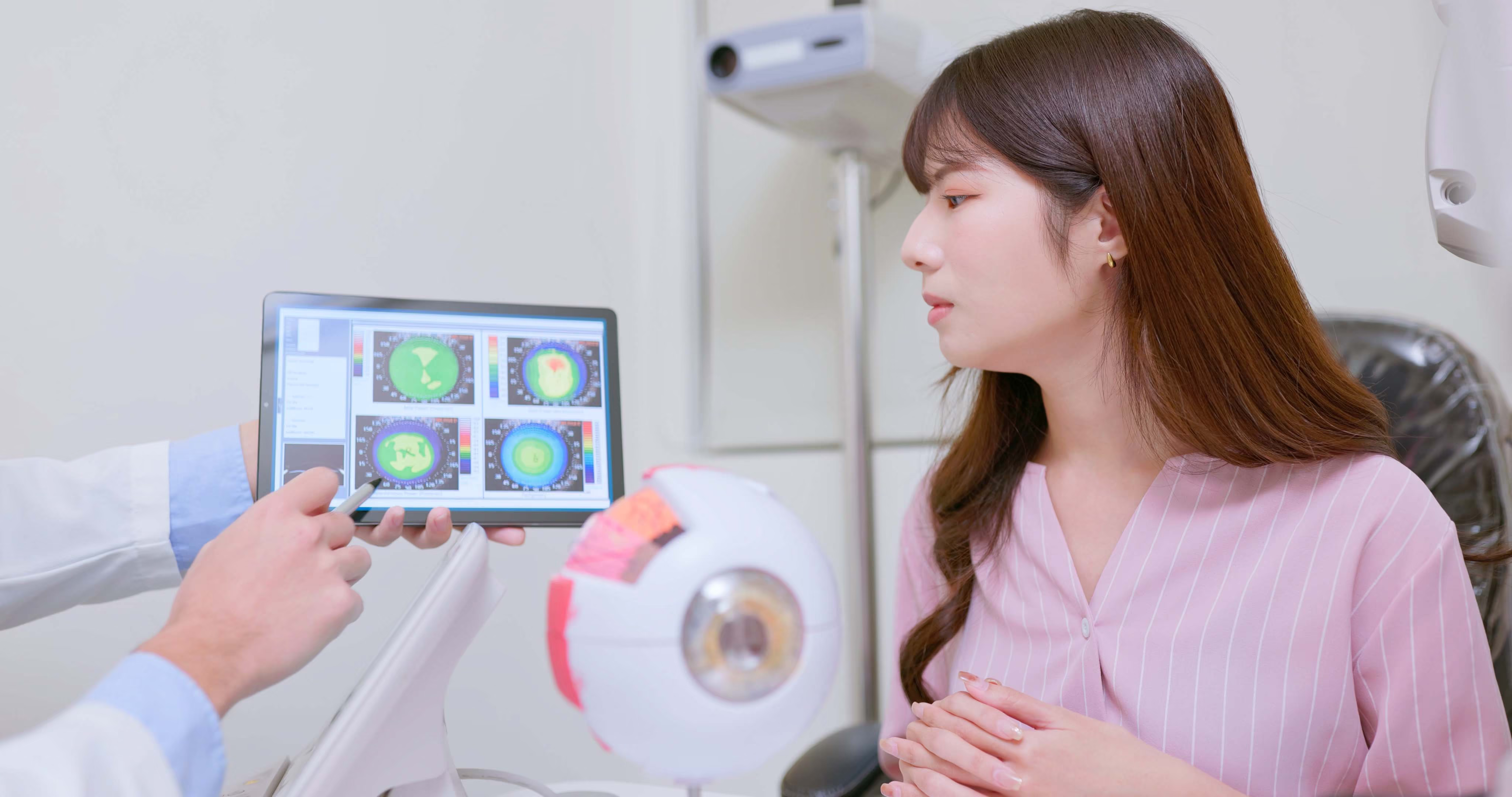
Transform Your Vision with LASIK Eye Surgery
If you have blurred or hazy vision, the most likely cause is that your eyes are not bending light the way they should. To see clearly, light has to pass through the front of your eye and focus just right on the retina. The retina is your eye's version of camera film: it captures the picture and sends it to your brain.
With LASIK, an ophthalmologist uses a laser to gently reshape the cornea, so light can travel straight through to the retina. If you have trouble seeing things far away or up close, or if lines and edges do not look straight, it is time to schedule a consultation. With offices in both Naperville and Downers Grove, Naper Grove Vision Care is here to help determine whether LASIK is an option.
How Does LASIK Eye Surgery Work?
Laser-Assisted In Situ Keratomileusis (LASIK) surgery is recommended for several eye conditions, including:
- Hyperopia (farsightedness)
- Myopia (nearsightedness)
- Astigmatism (distorted vision from an irregularly shaped cornea or lens)
Before LASIK, your ophthalmologist examines your eyes and measures your cornea, pupils, and any vision errors. If you wear contact lenses, you will need to switch to glasses for a few weeks before these tests, because contacts can change the shape of your cornea, and the doctor needs it in its normal shape for accurate measurements.
LASIK can be performed two ways: with a blade or without a blade. Bladeless LASIK is considered the superior option, because it is more precise and safer than traditional bladed LASIK.
The Advanced Bladeless LASIK Procedure
During the bladeless procedure, the surgeon first places a lid speculum on your eye to keep your eyelids from closing during the surgery. Before this, they apply numbing drops so you do not feel anything. They may also give you a mild sedative to help you feel more at ease.
Then they gently hold your eye in place and use a femtosecond laser to create a small flap in the cornea. This flap lets the surgeon reach the part of the cornea that needs reshaping. Next, guided by a computer, an excimer laser sends light pulses to sculpt the cornea's shape precisely.
Once the cornea is realigned correctly, the surgeon carefully returns the flap to its original position. The flap heals on its own, without stitches. The entire process takes less than 30 minutes. You might feel some burning, itching, or discomfort right after, which is completely normal. It usually takes about three to six months for your eye to fully settle.
Benefits of LASIK Eye Surgery
Moving from glasses or contacts to LASIK can feel like a big leap, but it comes with several benefits:
- Clear vision. The most immediate benefit is improved sight. Many people reach 20/40 vision or better without glasses after LASIK, which meets the requirements for most driver's license vision tests. A majority of recipients reach 20/20 vision without needing glasses.
- Quick results. For most people, vision improves greatly within three days, so they can return to driving and everyday activities quickly. There is no downtime and no overnight hospital stay; you can be in and out of the clinic within an hour. You will be advised to wear sunglasses to protect your eyes from UV rays for about six months, and to avoid swimming or putting your head underwater for several weeks.
- Long-term savings. The upfront cost may seem high, but LASIK can save money over time. There are no more ongoing expenses for new glasses, contact lenses, solutions, or yearly prescription checks. Over the years, those costs add up.
- No more hassle. Say goodbye to the daily routine of glasses and contacts. No more broken glasses, lost lenses, or dry, tired eyes from hours of wear. Activities like swimming, running, or getting up in the middle of the night become simpler.
- Reduced allergy symptoms. With contacts, you touch your eyes at least twice a day. If you have allergies, each touch can introduce allergens like pollen or dust, and contacts themselves collect allergens throughout the day. LASIK can help reduce these symptoms.
Who Is a Suitable Candidate for Laser Eye Surgery?
To consider vision correction surgery, you should meet the following criteria:
- You should be at least 18 years old, and preferably over 21, since that is when vision usually stabilizes.
- Your glasses or contact lens prescription should have been stable for the past year.
- Your vision issues should be ones that LASIK can correct.
- Your corneas must be thick and healthy enough for the procedure, and your eyes should be in generally good health.
Considering LASIK? Naper Grove Vision Care Can Help
Not sure if LASIK is right for you? Visit us in Naperville or Downers Grove, IL, for a thorough eye examination. We can check your vision and diagnose any conditions that could affect the outcome, such as dry eye syndrome, corneal thickness, and eye diseases. If LASIK is a safe option for you, we will refer you to a certified ophthalmologist or refractive surgeon.
After your surgery, our team handles your post-op care. We schedule follow-up exams to monitor healing, confirm your eyes are adjusting properly, and guide you through recovery. Our services are included in the total cost of the LASIK surgery, so you do not pay anything extra. For more information, call us at (630) 357-3511 or contact us online.