.avif)
Pediatric Eye Care
Clear vision helps kids succeed in every area of life, yet an estimated 1 in 4 children has a vision disorder that needs treatment. Our pediatric eye care team diagnoses, treats, and guides you through a wide range of concerns, from common issues like blocked tear ducts to rare conditions, in a comfortable, engaging visit.
Comprehensive Vision Care for Children
Clear vision is key for kids to do well in all areas of life. Illinois law requires children entering kindergarten, or enrolling for the first time in a public, private, or parochial school, to have a comprehensive eye examination by a licensed optometrist or ophthalmologist. Because eye-related disorders can be present from birth, vision screenings are recommended for children of all ages, even babies.
If you notice anything unusual about your child's eyesight, the pediatric eye care team at Naper Grove Vision Care is equipped to diagnose, treat, and guide you through a range of concerns, from something as common as a blocked tear duct to something rare like ocular melanoma (eye cancer). With offices in both Naperville and Downers Grove, we are here to help.
Common Eye Conditions in Children
It is estimated that 1 in every 4 children has some kind of vision disorder that needs treatment. Kids are also naturally active, and accidents can happen that hurt their eyes, particularly during sports. As a parent, watch for behaviors that suggest your child needs help to see better:
- Squinting
- Watery eyes for no apparent reason
- Rubbing their eyes often
- Closing one eye to see clearly
- Complaining about headaches or eye strain
- Sitting very close to the TV to see it clearly
These issues can come from the physical shape of the eye, how the eye communicates with the brain, or other underlying health issues, all of which can be detected early.
Some of the most common eye conditions in children are:
- Strabismus: The eyes do not coordinate correctly, leading to what many call "crossed eyes."
- Amblyopia: Known as "lazy eye," this causes weaker vision in one eye. It is more common in children under eight, especially those born prematurely or at a low birth weight.
- Conjunctivitis (pink eye): An infection or inflammation of the conjunctiva, the transparent membrane that lines the eyelid and covers the white of the eye. It can be caused by viruses, bacteria, or allergies.
- Perceptual vision problems: Issues not with the eye itself but with how the brain processes visual information. They can affect reading, writing, and hand-eye coordination.
- Color blindness: Difficulty telling certain colors apart, typically red and green, but sometimes blue and yellow.
- Blocked tear ducts: Common in newborns. A blockage in the tear duct system causes watery, irritated eyes.
For problems related to how the eye focuses light, known as refractive errors, glasses or contact lenses usually offer a simple solution. These errors include:
- Myopia (nearsightedness): Close objects are clear, but distant objects are hazy.
- Hyperopia (farsightedness): Distant objects are clear, but close ones are not.
- Astigmatism: General blurry vision because the eye does not focus light evenly on the retina.
What Happens During a Pediatric Eye Exam?
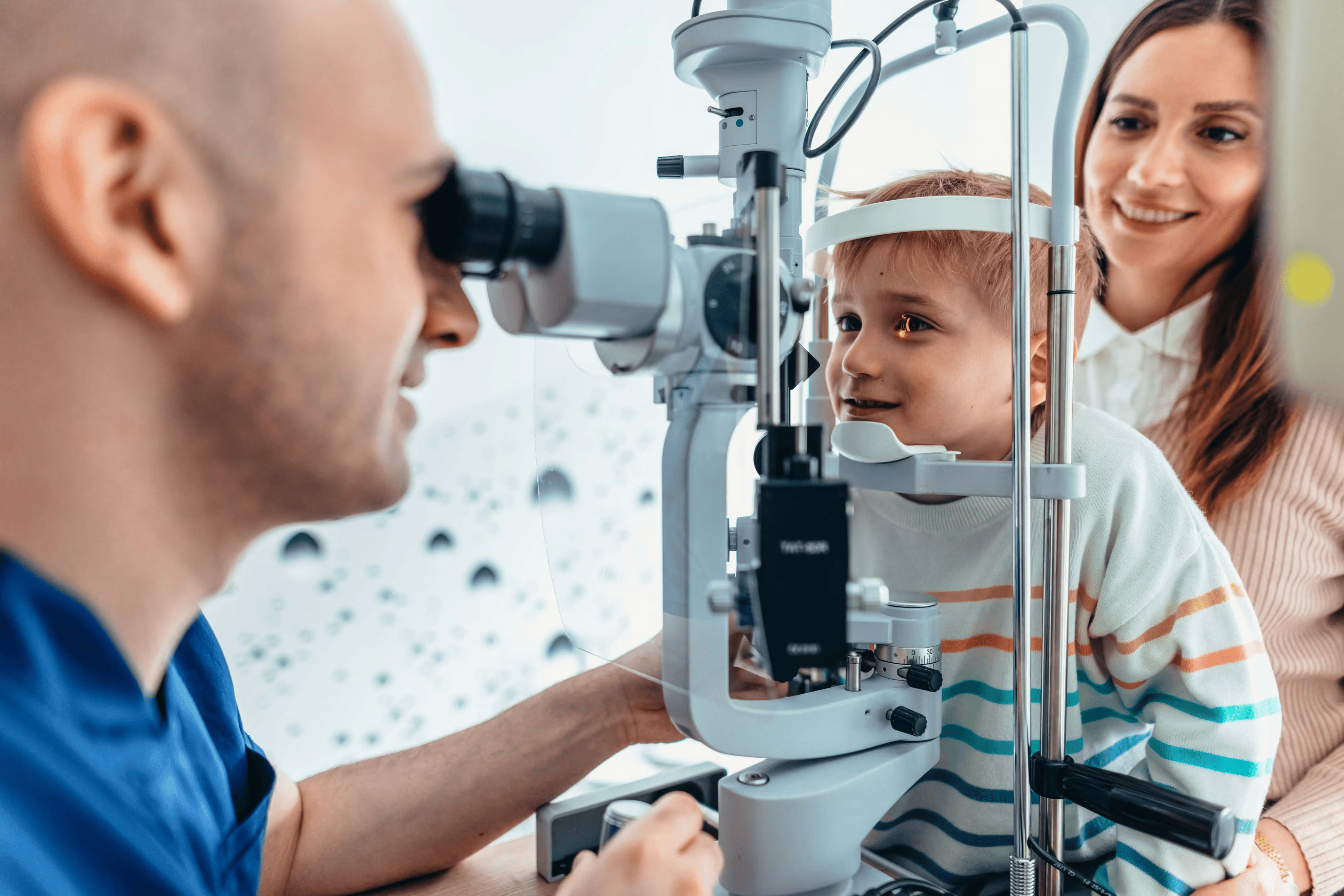
At a well-equipped clinic such as Naper Grove Vision Care, pediatric optometrists use a range of technologies and techniques to examine your child's eyes and sight. They will check:
- The ability of the eyes to focus
- How well they judge distances (depth perception)
- Awareness of surroundings (peripheral awareness)
- The movement and coordination of the eyes (eye tracking)
- The ability to tell colors apart (color perception)
- How well the eyes work together (eye teaming)
- Clarity of vision up close (near visual acuity)
- Clarity of vision at a distance (distance visual acuity)
A Pediatric Eye Check-Up Guide for Your Child
It is a common misconception that the quick vision screenings at schools are all a child needs. These tests are nowhere near as thorough as a full eye exam by a licensed optometrist or ophthalmologist.
School screenings can help identify whether your child has a vision problem, but they are not designed to check for eye coordination problems, eye diseases, or visual perception issues. Even if your child has 20/20 vision, there may be other problems that only a children's eye doctor can uncover.
Newborns get their eyes screened before they leave the hospital. After this initial check-up, schedule thorough vision examinations with a pediatric optometrist to monitor eye health, vision, and alignment. The key times are:
- Once between 6 and 12 months old
- At 3 years old
- Once every two years during the school years
Keeping Your Child's Vision on Track
At Naper Grove Vision Care in Naperville, our children's eye doctors go the extra mile to diagnose eye disorders early and make each visit as comfortable and engaging as possible. During your visit, we check your child's vision sharpness, how well their eyes work together, and their overall eye health. We know an eye doctor visit can be stressful for a child, so we do everything we can to make it an enjoyable experience.
If your child needs prescription glasses, contact lenses, or custom eyewear for sports, we have a wide selection to choose from. Convincing kids to wear glasses can be a challenge, so we offer bright colors, fun shapes, and themes from favorite cartoons and superheroes. Our staff will help you and your little one find the perfect pair, so they wear them proudly and with confidence.
If you have any questions or would like to book an appointment, call us at (630) 357-3511. Let us set your child up for a lifetime of good vision health.