.avif)
What are the three types of vision correction?
Michael Halkias, O.D.

Vision correction is essential for people experiencing difficulty with sight due to refractive errors of the eye. These errors include nearsightedness, farsightedness, and astigmatism, which can blur vision and make everyday tasks challenging. Three primary methods are used to correct these issues: eyeglasses, contact lenses, and refractive surgery.
Eyeglasses are the most common form of vision correction. They are composed of lenses that are specifically crafted to counteract the imperfections in the user's vision. With a variety of materials, coatings, and designs, eyeglasses can provide a non-invasive solution to most refractive errors.
Contact lenses, on the other hand, offer a more discreet way of correcting vision. Sitting directly on the cornea, these thin lenses correct refractive errors by altering the way light enters the eye.
Refractive surgery, including procedures such as LASIK, provides a long-term solution to refractive errors by reshaping the cornea itself. This option can potentially eliminate the need for glasses or contacts but involves a more complex decision-making process and an assessment of candidacy, risks, and benefits.
Understanding Vision Correction
Vision correction encompasses a variety of methods aimed at rectifying vision impairments. These methods range from non-surgical options like glasses and contact lenses to surgical procedures designed to correct eyesight permanently.
Types of Vision Correction Procedures
Glasses: The most common and widely used method, glasses correct refractive errors by bending light rays to focus directly on the retina.
- Single vision lenses: Correct one type of vision problem
- Bifocal lenses: Contain two lens powers to correct both near and distant vision
- Progressive lenses: Provide a smooth transition from distance through intermediate to near vision
Contact Lenses: These serve as an alternative to glasses and sit directly on the eye.
- Soft lenses: Made of soft, flexible plastics that allow oxygen to pass through to the eye
- Rigid gas permeable (RGP) lenses: Durable and resistant, offering clear, crisp vision
Refractive Surgery: Aims to change the shape of the cornea permanently, improving the refractive state of the eye.
- LASIK (Laser-Assisted In Situ Keratomileusis): A laser is used to reshape the cornea.
- PRK (Photorefractive Keratectomy): The surface layer of the cornea is reshaped using a laser.
- LASEK (Laser-Assisted Subepithelial Keratectomy): Combines methods from PRK and LASIK.
Introduction to Vision Correction Surgery
Vision correction surgery refers predominantly to refractive surgery, which corrects vision by altering the shape of the cornea.
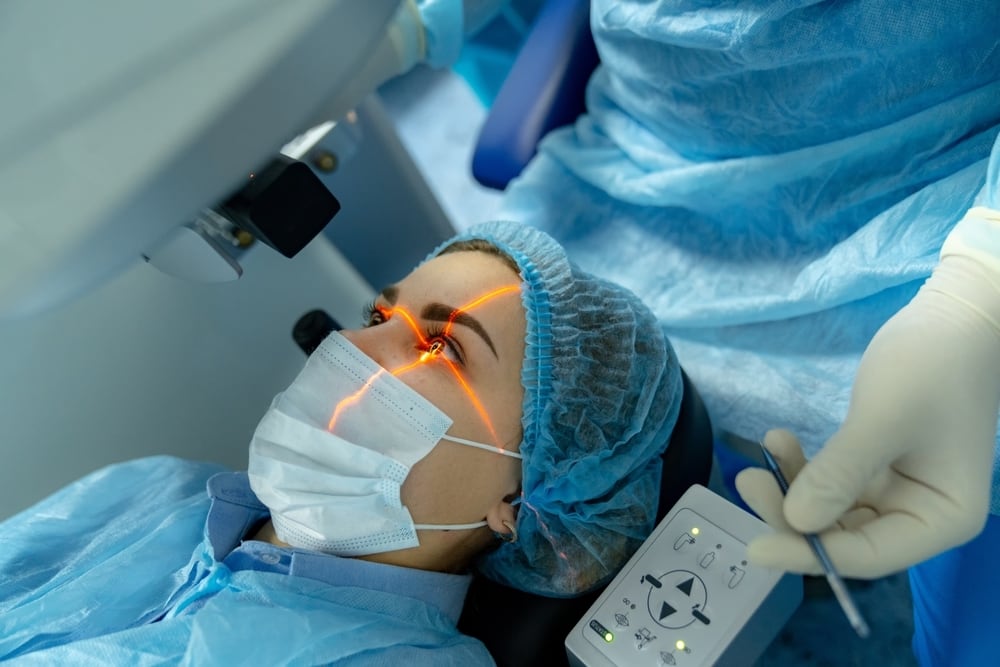
- Pre-surgical evaluation: It is critical for determining candidacy, involving measurements of corneal thickness and topography.
- Post-surgery care: Includes follow-up visits to monitor the healing process and evaluate the success of the correction.
Surgical Risks: While highly successful, they may include complications such as dry eyes, halos, and infection.
Unlike glasses or contacts, refractive surgeries offer a permanent solution to vision correction but require a thorough understanding of the risks and benefits before proceeding.
Surgical Vision Correction Options
Several surgical procedures are available to correct vision. They differ in techniques, recovery times, and suitability for various eye conditions.
LASIK Surgery
LASIK (Laser-Assisted In Situ Keratomileusis) is a popular form of refractive eye surgery. It uses a highly precise laser to reshape the cornea, which can correct myopia, hyperopia, and astigmatism. The majority of patients achieve 20/20 vision or better after the procedure.
PRK Surgery
PRK (Photorefractive Keratectomy) is another type of refractive surgery similar to LASIK, but it does not involve creating a corneal flap. Instead, the outer layer of the cornea is gently removed before reshaping the underlying corneal tissue with a laser, suitable for patients with thin corneas.
Implantable Lenses
These lenses, also known as phakic intraocular lenses (IOLs), are surgically inserted inside the eye without removing the natural lens. They are an option for individuals with severe myopia or hyperopia, and unlike LASIK or PRK, the process is reversible.
Refractive Lens Exchange (RLE)
Refractive lens exchange, similar to cataract surgery, involves the replacement of the eye's natural lens with an artificial intraocular lens (IOL). This procedure is best suited for people with presbyopia or high hyperopia, where LASIK or PRK may not be advised.
Naper Grove Vision Care Expertise
Naper Grove Vision Care provides comprehensive solutions for vision correction, demonstrating extensive proficiency in the latest surgical techniques.
Highlight Naper Grove Vision Care's Expertise in Vision Correction Surgery
Naper Grove Vision Care possesses a depth of experience in vision correction surgery. The clinic's surgical team is renowned for their precision and skill in procedures such as LASIK, PRK, and lens implants. The team's expertise is supported by advanced technology and a commitment to patient safety.
- LASIK: Utilizing state-of-the-art laser equipment, Naper Grove Vision Care offers customized LASIK surgery, tailored to each patient's unique eye structure.
- PRK: For patients not suitable for LASIK, the clinic excels in PRK (photorefractive keratectomy), a proven alternative for reshaping the cornea.
- Lens Implants: For those with cataracts or high refractive errors, the clinic skillfully performs lens implant surgeries, including multifocal and accommodating lens options.
Naper Grove Vision Care's surgical results are a testament to their expertise, consistently achieving improvement in vision acuity and patient satisfaction.
Benefits of Choosing Naper Grove Vision Care
Naper Grove Vision Care is recognized for their comprehensive approach to vision correction surgery and their array of complementary services. Patients can expect a blend of advanced technology and personalized care.
Emphasize the Benefits of Choosing Naper Grove Vision Care for Vision Correction Surgery
Naper Grove Vision Care stands out due to its state-of-the-art surgical techniques and a team of highly experienced ophthalmologists. They offer a suite of vision correction procedures, including:
- LASIK (Laser-Assisted In Situ Keratomileusis): A popular form of refractive surgery for correcting myopia, hyperopia, and astigmatism.
- PRK (Photorefractive Keratectomy): Suitable for patients with thin corneas, offering precise correction with a longer recovery period.
- Refractive Lens Exchange (RLE): An alternative for patients not suitable for laser procedures, replacing the eye's natural lens with an artificial intraocular lens (IOL).
Complementary Procedures and Services
Besides primary vision correction surgeries, Naper Grove Vision Care provides:
- Preoperative Evaluations: Thorough assessments to determine the best course of action for vision correction.
- Postoperative Care: Critical follow-up to monitor recovery and ensure the health of the patient's vision.
- Additional Eye Care Services: Including cataract surgery, glaucoma management, and routine eye exams.