.avif)
Can astigmatism be corrected?
Michael Halkias, O.D.
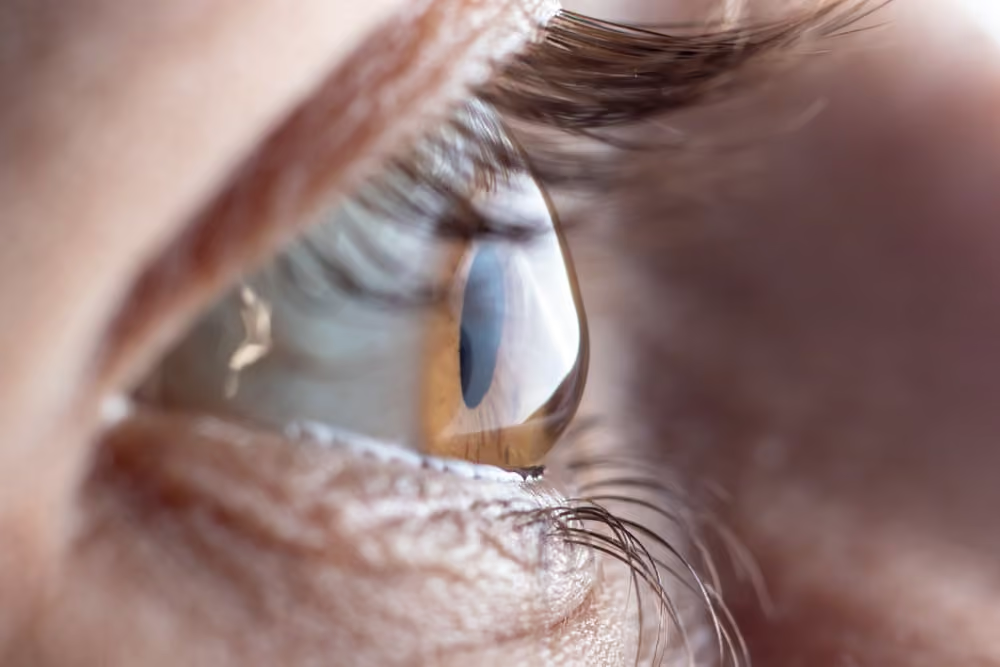
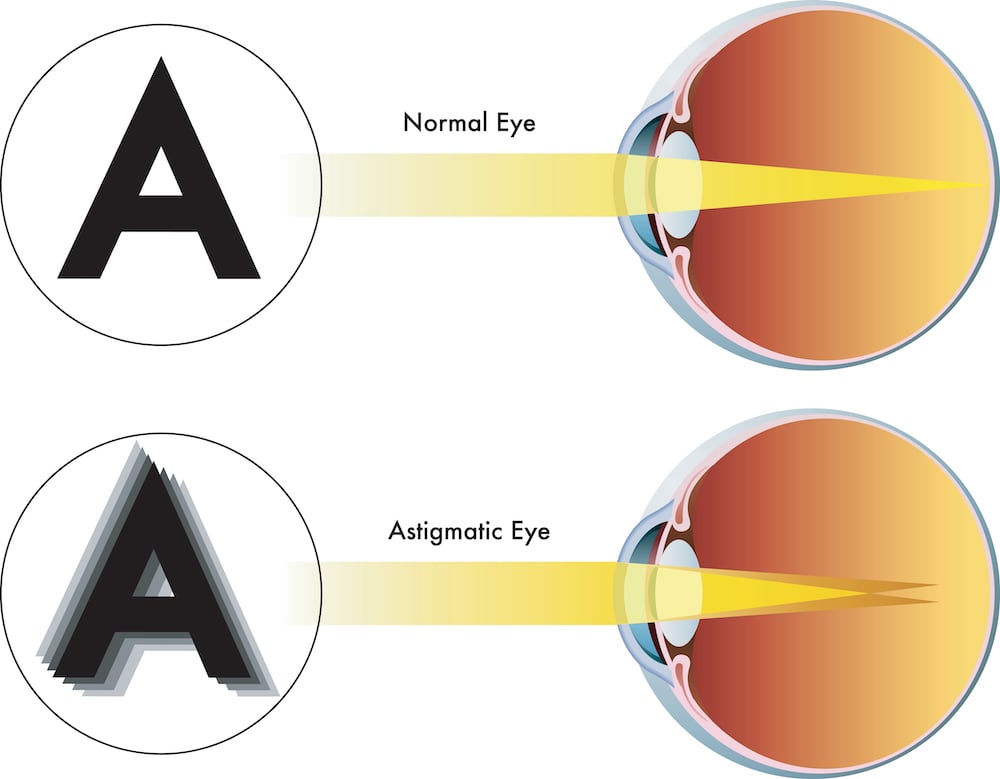
Astigmatism is a common refractive error affecting vision clarity. It occurs when the cornea or the lens inside the eye has an irregular shape, preventing light from focusing properly on the retina. People with astigmatism often experience blurred or distorted vision at all distances, and this condition can occur alongside other vision issues such as nearsightedness or farsightedness.
Naper Grove Vision Care, with its proficient team of eye care specialists, has a longstanding reputation for addressing a wide range of vision problems, including astigmatism. They employ state-of-the-art diagnostic tools to accurately assess visual acuity, the degree of astigmatism and the most suitable corrective measures for their unique vision needs.
Corrective options provided by the optometrists at Naper Grove Vision Care include prescription eyeglasses and contact lenses, which are tailored to counteract the specific irregularities causing the blurred vision associated with astigmatism. For those seeking a more permanent solution, they also offer consultations regarding refractive surgery options such as LASIK, which can reshape the cornea and reduce or eliminate the need for corrective lenses.
Understanding Astigmatism
Astigmatism is an eye condition characterized by an irregular curvature of the cornea or lens. This section provides an in-depth look at its nature, variations, and the symptoms it can cause.
What Is Astigmatism and How It Affects Vision
Astigmatism occurs when the cornea, the clear front surface of the eye, or the lens inside the eye has an atypical, non-uniform curvature. While a normal eye's surface is spherical like a basketball, an astigmatic eye resembles the shape of a football. This distortion results in refractive errors as light rays entering the eye are not focused evenly on the retina, leading to blurred or distorted vision at all distances.
Understanding the Different Types of Astigmatism
There are several types of astigmatism, each associated with the specific curvature and orientation of the cornea or lens:
- Corneal Astigmatism: When the irregularity is in the cornea.
- Lenticular Astigmatism: Rooted in the lens of the eye.
- Myopic Astigmatism: At least one principal meridian is nearsighted.
- Hyperopic Astigmatism: One or more principal meridians are farsighted.
- Mixed Astigmatism: Some meridians are nearsighted and others are farsighted.
Common Symptoms of Astigmatism
Symptoms associated with astigmatism may vary between individuals, but they typically include:
- Blurred or distorted vision at multiple distances
- Difficulty with night vision
- Eye strain or discomfort
- Headaches resulting from eye strain
- Squinting in an attempt to see clearly
Diagnosis and Expertise
Astigmatism is a common vision condition diagnosed and managed by eye care professionals with precision and understanding.
Diagnosis of Astigmatism at Naper Grove Vision Care
At Naper Grove Vision Care, patients undergo a comprehensive eye examination to determine the presence of astigmatism. The process is typically comprised of the following steps:
- Patient History: Collecting information on vision problems, health concerns, and any symptoms to guide the diagnostic process.
- Visual Acuity Test: Assessing the clarity of sight through reading letters from a distance chart, typically involving an eye chart projection.
- Keratometry/Topography: Measuring the curvature of the cornea using specialized instruments, providing detailed maps of cornea structure.
- Refraction: Determining the lens prescription that corrects visual impairment through a phoropter or retinoscope.
The acquired data is faithfully interpreted to develop an individualized treatment plan for each patient.
Treatment Options
Astigmatism is a common vision condition where the eye does not focus light evenly onto the retina, resulting in blurred or distorted vision. Treatment is tailored to correct this optical imperfection and improve vision quality. Here are the most effective treatment options for astigmatism.
Prescription Eyeglasses and Contact Lenses
Prescription eyeglasses are the most straightforward method to correct astigmatism. They compensate for the uneven curvature of the cornea or lens that causes the condition. Eyeglasses use specially crafted lenses to redirect light to the proper focus point on the retina.
- Pros: Easy to wear and maintain, cost-effective long-term solution, wide variety of styles available
- Cons: Physical appearance may not be preferred by all individuals, can be uncomfortable or inconvenient during activities
Contact lenses offer an alternative to glasses and can provide a wider field of unobstructed vision. Standard toric contact lenses are specifically designed to correct astigmatism.
- Pros: More natural appearance; less impact on physical activities, corrects vision without altering appearance
- Cons: Requires daily cleaning and care, risk of eye infections if not handled properly
Orthokeratology (Ortho-K) Lenses
Orthokeratology involves wearing specially designed rigid gas-permeable contact lenses overnight. These lenses gently reshape the cornea, providing clearer vision during the day without the need for glasses or contact lenses.
- Pros: Temporarily corrects vision without surgery, non-invasive and reversible
- Cons: Effect is temporary; requires consistent use, may not be suitable for all degrees of astigmatism
Refractive Surgery Options
Refractive surgery, such as LASIK (Laser-Assisted in Situ Keratomileusis), is a more permanent solution for correcting astigmatism. This surgical procedure uses a laser to reshape the cornea, changing its focusing power.
- Pros: Potential long-term solution for vision correction, quick recovery time for most patients
- Cons: Involves risks associated with surgery, not suitable for everyone, such as those with thin corneas
Other surgical options include PRK (Photorefractive Keratectomy) and LASEK (Laser Epithelial Keratomileusis), which are similar to LASIK but may be suitable for individuals with certain corneal issues.
Prevention and Management
Astigmatism, a common vision condition that can cause distorted or blurred vision, can be both prevented from worsening and managed effectively through specific strategies.
Preventing Astigmatism Progression
While astigmatism can be genetic and often present at birth, certain behaviors and environmental factors may impact its progression. To maintain eye health and help prevent the progression of astigmatism, consider the following:
- Regular Eye Exams: Early detection through annual eye check-ups can help track any changes in astigmatism.
- Eye Protection: Wear UV-protective sunglasses to safeguard eyes against harmful sun rays that can potentially damage the cornea.
Expert Tips for Managing Astigmatism
Management of astigmatism focuses on corrective solutions and daily practices to ensure optimal vision. The following are some expert-recommended strategies:
- Corrective Lenses: Utilize eyeglasses or contact lenses prescribed by your eye care professional.
- Laser Surgery: Refractive surgery options like LASIK can reshape the cornea and provide a permanent solution to astigmatism for eligible candidates.
- Healthy Lifestyle: Embrace a lifestyle that supports eye health.